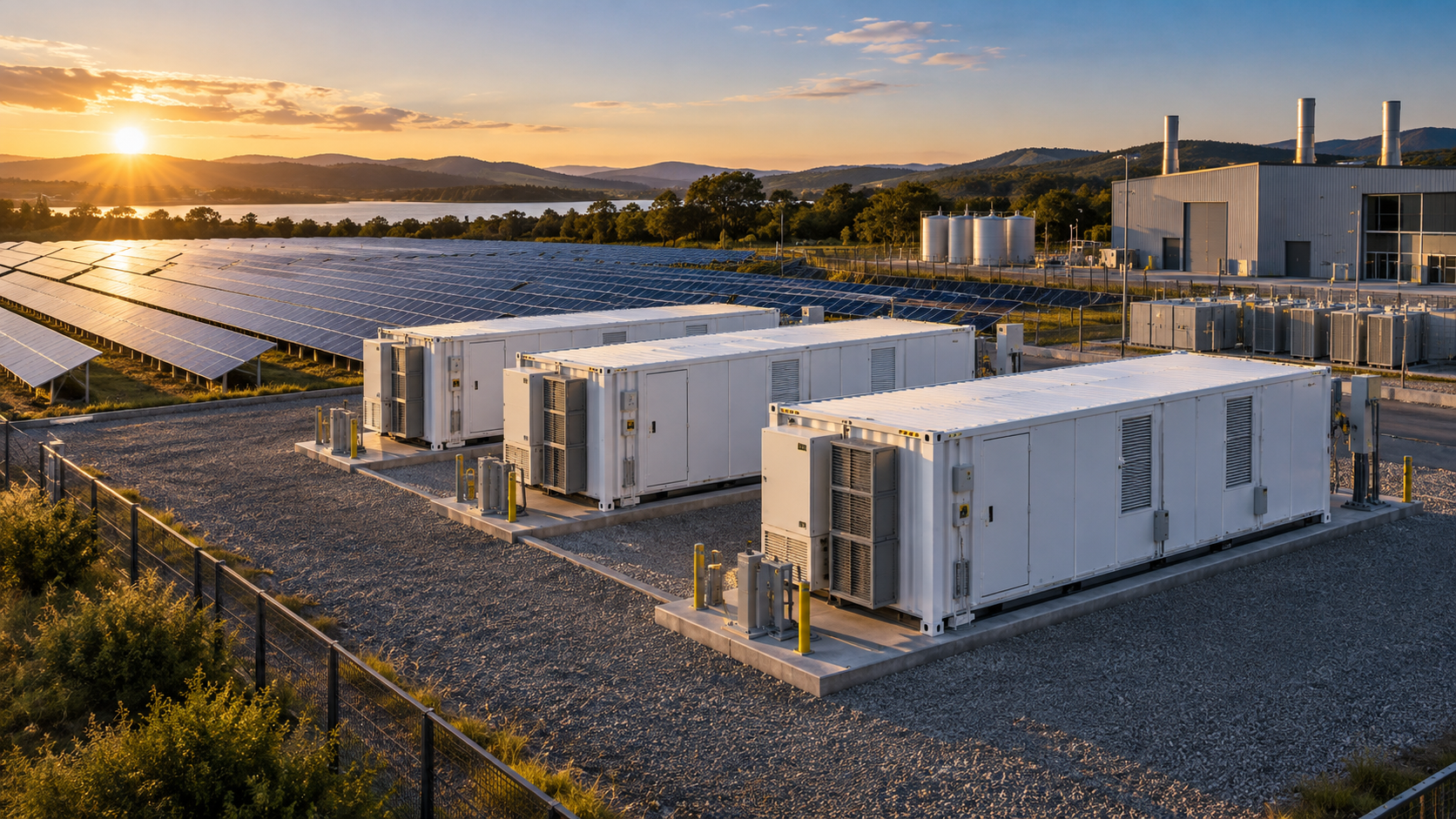


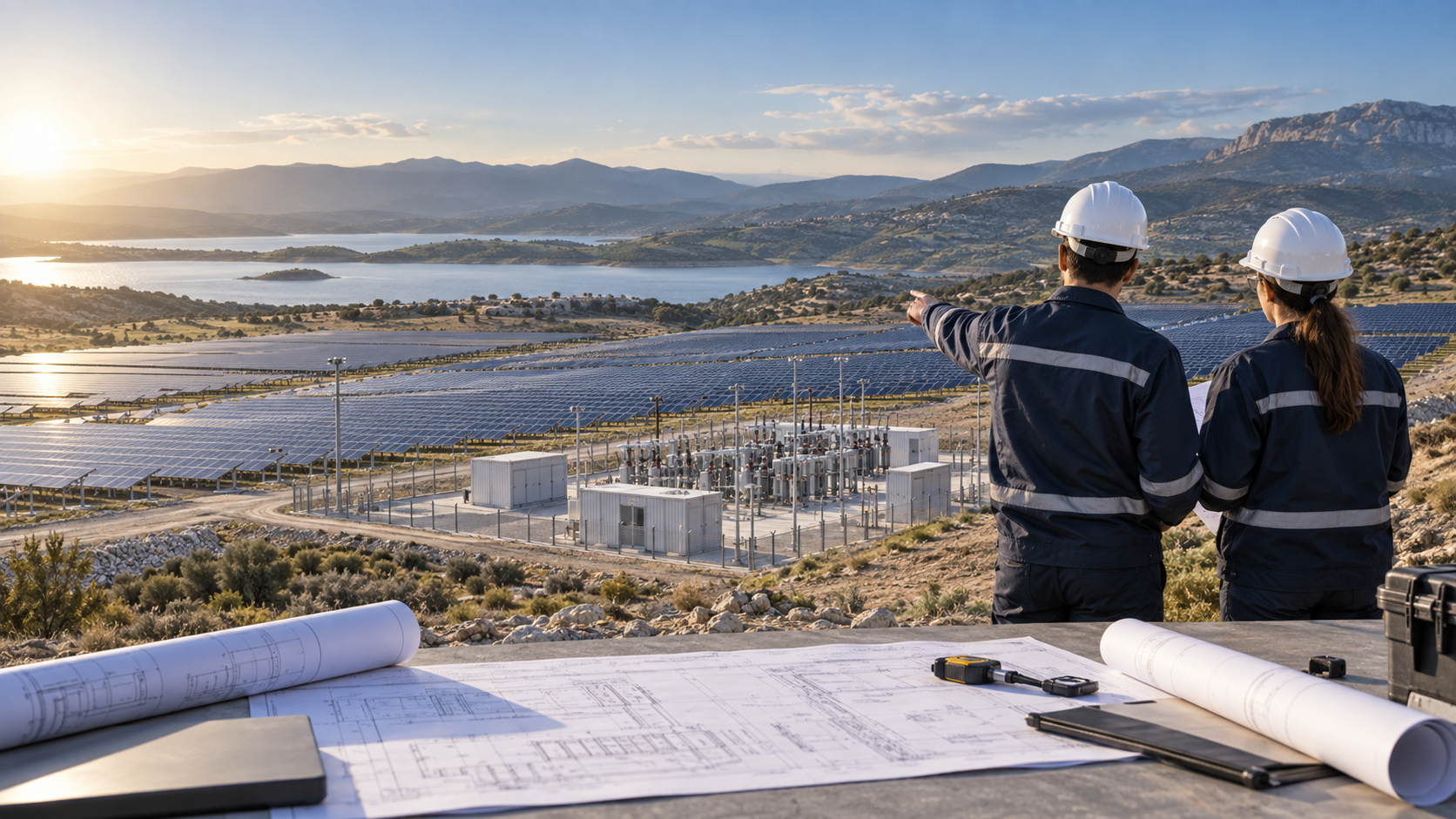
A successful solar investment depends on more than the modules installed on site. Site conditions, electrical infrastructure, commercial objectives and operating requirements must be aligned within one delivery process.
1. Opportunity assessment and feasibility
Demand data, site conditions, grid constraints and investment objectives are assessed to define the right project scope. Technical and financial assumptions are documented so the investment decision rests on a traceable basis.
2. Development and permitting
Grid-connection requirements, applications, permits, land or roof constraints and stakeholder interfaces are coordinated with the project schedule.
3. Engineering
Electrical, civil and structural design translates the concept into an executable system. Equipment ratings, protection, cable sizing, yield expectations, monitoring and maintainability are considered together.
4. Procurement and supply-chain management
Equipment is selected for technical compatibility, lifecycle value, availability and warranty support. Procurement planning helps keep the project on schedule while maintaining quality and traceability.
5. Construction and site execution
Site activities are managed through coordinated planning, HSE controls, quality inspections and progress reporting. Installation is checked against approved designs and manufacturer requirements.
6. Testing and commissioning
Electrical tests, functional checks, protection verification, communications and plant control tests confirm that the system is safe and ready for operation.
7. Operations, optimization and lifecycle support
Monitoring, preventive maintenance and performance analysis protect long-term output. Where required, refurbishment and repowering extend asset life and improve capability.
Explore Keypower’s turnkey EPC capabilities, review our project portfolio, or contact our team.