


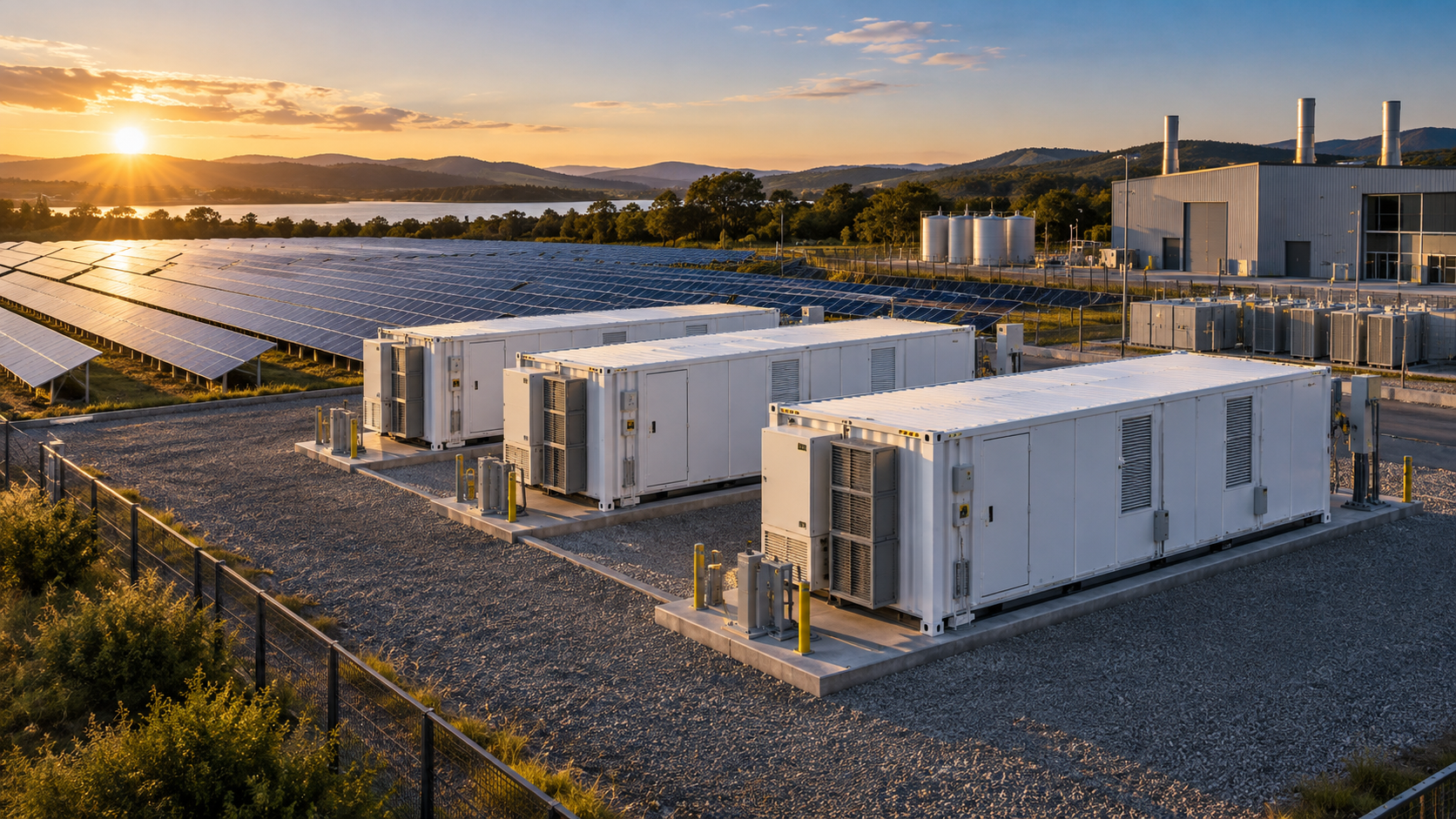
Battery energy storage makes electricity available at a different time from when it was generated or purchased. Because every facility has a different load profile and operating objective, storage should be sized for the use case—not from a standard capacity table.
Separate power from energy
Power, measured in kW or MW, determines how quickly the system can charge or discharge. Energy capacity, measured in kWh or MWh, determines how long that power can be sustained. Both values must be defined together with the required duration.
Use high-resolution operating data
Monthly bills are not enough for accurate sizing. Interval data reveals peaks, load variability, operating schedules and the relationship between consumption and on-site generation. Data quality and the analysis period materially affect the result.
Model the operating strategy
Peak shaving, load shifting, self-consumption, backup power and grid services place different demands on the battery. The model should include efficiency, usable state-of-charge window, degradation, temperature, availability and dispatch constraints.
Design safety and integration from the outset
Cell chemistry, thermal management, fire strategy, electrical protection, communications, EMS logic and grid compliance form one system. The final capacity should therefore emerge from a techno-economic and engineering assessment, not only an energy calculation.
Explore Keypower’s Battery Energy Storage System solutions, or request a project assessment.