
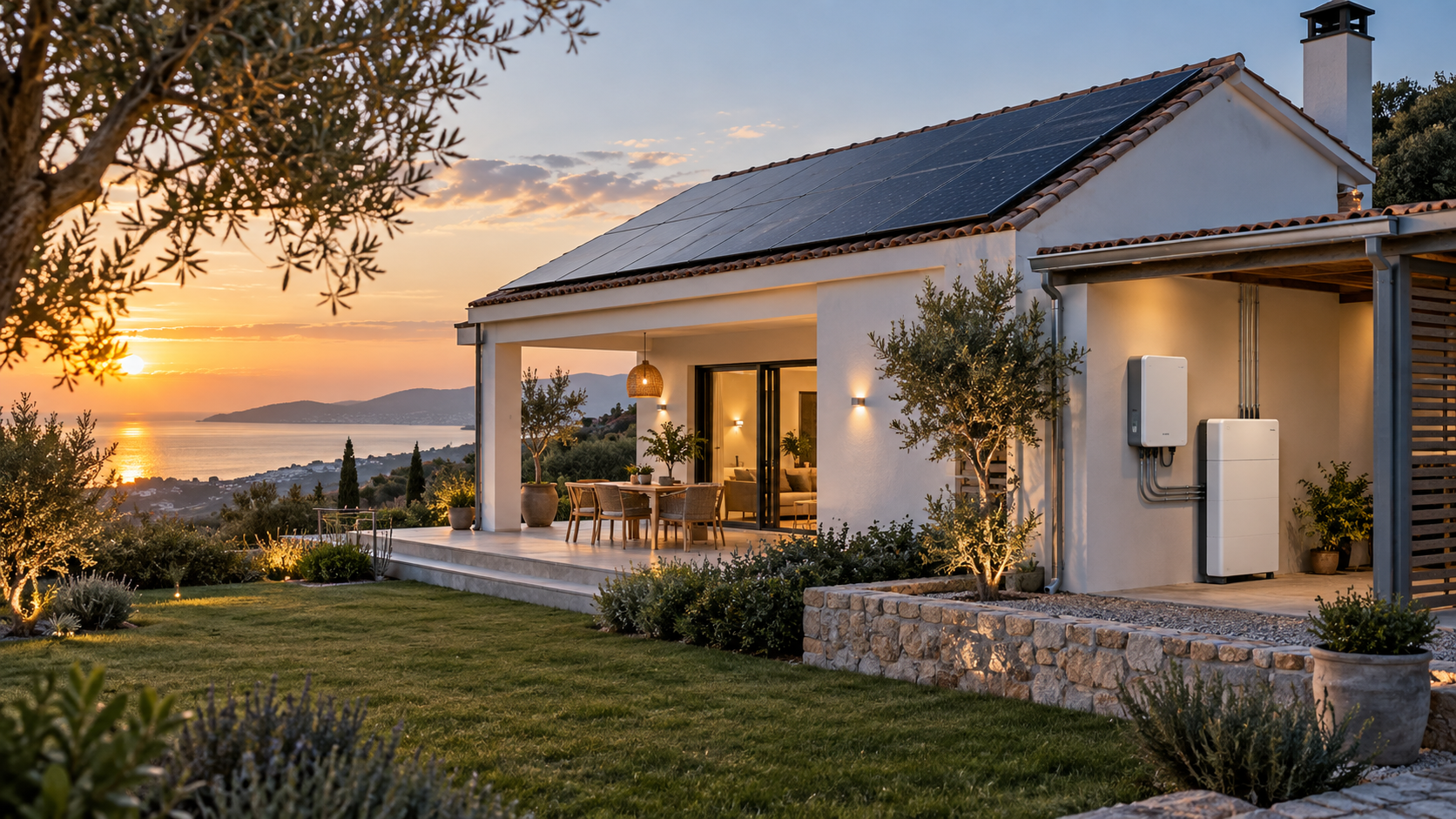
A home solar-plus-storage system combines rooftop generation with a hybrid inverter and battery. The objective is not simply to produce electricity, but to use more of that energy when it creates the greatest value for the household.
How the system works
Solar modules generate DC electricity during daylight hours. The hybrid inverter converts it for household use and coordinates the flow between the home, battery and utility grid. When generation exceeds immediate demand, surplus energy can charge the battery. When solar output falls, the battery can support selected loads according to the operating strategy.
Start with the household load profile
Good design begins with consumption data. Daytime and evening demand, high-power appliances, seasonal changes and future additions such as a heat pump or EV charger all affect system sizing. A larger battery is not automatically a better solution; capacity should match the intended use case and the available solar generation.
Backup power requires deliberate design
Not every battery system provides backup during a grid outage. Critical loads must be identified, separated where necessary and matched with the inverter’s islanding capability, battery power and expected backup duration. The transition logic and protection scheme should be tested during commissioning.
Evaluate the complete architecture
Module layout, inverter capability, battery chemistry, usable capacity, communications, protection and monitoring should be considered as one system. Installation quality, warranty conditions and after-sales support are as important as headline equipment specifications.
Explore Keypower’s residential energy solutions, or contact our team for a site-specific assessment.